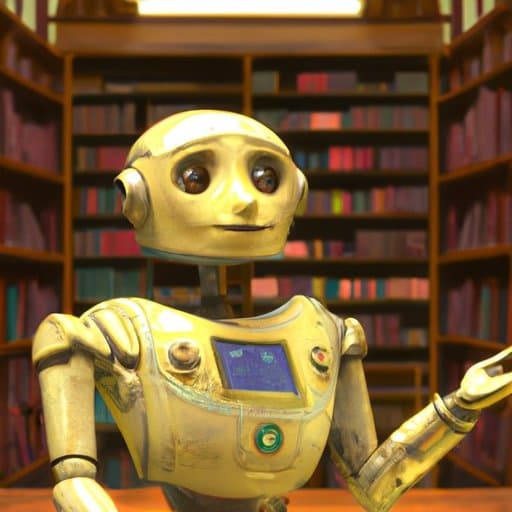
AI's Steady Advance: Revolutionizing Traditional Classroom Learning and Education
Remember the age-old fable of the tortoise and the hare? Just as the slow and steady tortoise won the race, the field of Artificial Intelligence (AI) has steadily made its way to the forefront of our lives. The classic classroom scene of students with books and pens is being slowly replaced with smart devices, digital textbooks, and AI. A step towards the future, but what does this mean for education?
Overcoming Education Challenges: The Role of Personalized Learning in Enhancing Academic Quality
Students face challenges involving both access to education and the quality of learning. The World Bank’s original learning-poverty estimate, using a 2015 reference year, found that 53% of children in low- and middle-income countries could not read and understand a simple story by the end of primary school. This is a dated baseline, not a current rate. It illustrates the importance of foundational literacy; it does not by itself establish that AI improves learning. World Bank’s learning-poverty definition and methodology.
AI as the Game-Changer: Revolutionizing Education Through Personalization and Accessibility
Enter AI, the unexpected hero of our story. AI has the potential to revolutionize education, making it more accessible, personalized, and effective. From AI-driven tutoring systems to predictive analytics, AI is bringing about a fundamental shift in how education is delivered and consumed.
Understanding AI in Education: A Deep Dive into Challenges and Opportunities
Let's embark on an enlightening journey to understand how AI is reshaping the educational landscape. By the end of this post, you'll comprehend the transformative power of AI in education and get insights into the challenges and opportunities that come with it. It's time to unfold the story of AI and education, one byte at a time.
How AI is Transforming Education
AI and Personalized Learning
The core strength of AI lies in its ability to tailor learning to individual students' needs. Instead of a one-size-fits-all approach, AI enables adaptive learning, where the content is modified based on a student's performance and understanding.
This doesn’t mean that the time tested tried and true methods of teaching will go away. Instead, AI will bolster the tools and techniques teachers use today to enhance the teacher’s ability to reach the students.
AI and Predictive Analytics
Predictive analytics can give educators insights into students' performance and possible learning gaps. This information can guide interventions and support, ensuring no student is left behind. AI has the ability to analyze enormous amounts of data, far more than any human data scientist could do on his own. This will lead to a ground breaking understanding of how each child learns on an individual level.
The Challenges of AI in Education
While the potential benefits are significant, integrating AI into education has challenges. Issues like data privacy, the digital divide, and the lack of infrastructure in many parts of the world pose significant barriers to AI adoption.
Furthermore, the rapid advancement of AI technologies means educators need continuous training to leverage these tools effectively. It's essential to balance human instruction and AI-enabled learning, ensuring that technology enhances rather than replaces the human touch.
The Future of AI in Education
The future of AI in education is a promising one. With technological advances, we can expect AI to become more integrated into our learning systems, providing better and more personalized education. However, we need to navigate the challenges and ensure that the benefits of AI reach all learners, irrespective of their socio-economic background.
The AI revolution in education is just beginning. As the story unfolds, we might redefine what learning means in the 21st century.
One thing is clear, AI is an exciting new frontier in education, potentially creating a more personalized and effective learning environment. Just as the tortoise transformed the race with the hare, AI is transforming the field of education, one step at a time.
To explore AI-assisted learning, choose a topic you already know and ask an AI tool for an explanation, a worked example, and a short practice question. Check the explanation and answer before using the material with students. This small exercise can help you judge where the tool is useful and where it needs correction.
The author generated this text in part with an OpenAI GPT large-scale language-generation model. Upon generating draft language, the author reviewed, edited, and revised the language to their own liking and takes ultimate responsibility for the content of this publication.
