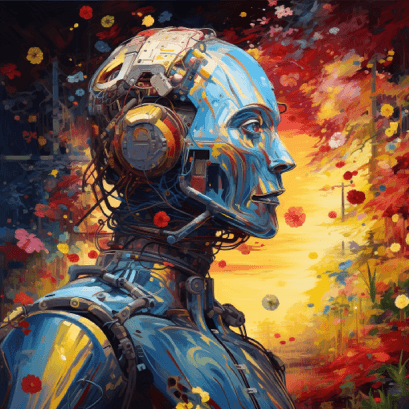
The term artificial intelligence covers systems with very different abilities. Treating them as though they all work the same way leads to mistaken expectations. The misconceptions below illustrate where those expectations often go wrong.
Misconception 1: AI and Robots are the Same
One of the most common misconceptions is equating AI with robots. While robots can be powered by AI, not all AI systems are robots. AI is a really big area in computer science. AI involves creating algorithms to solve problems, make decisions, or learn from experience. Robots, on the other hand, are physical entities that can interact with the physical world, often powered by AI to perform specific tasks.
Misconception 2: AI Will Replace Every Human Job
AI can automate tasks, change jobs, and in some circumstances eliminate roles. It can also assist workers and create demand for different skills. The ILO’s August 2023 analysis of generative AI found greater potential for augmenting occupations than fully automating them, while identifying particular exposure in clerical work. That was an assessment of the technology studied, not a guarantee that no workers would be displaced. ILO Working Paper 96.
Misconception 3: AI Can Think and Feel Like Humans
AI can produce language that sounds thoughtful or emotional. That behavior alone does not demonstrate human-like emotional experience or consciousness. Evaluate a system’s demonstrated abilities and limits rather than inferring an inner experience from conversational style.
Misconception 4: AI is Infallible
AI is not perfect. It can make mistakes, especially when fed with incorrect or biased data. The accuracy of AI's output heavily depends on the quality of the input data.
Misconception 5: AI is Only for Big Businesses
AI is not exclusive to big corporations. Small businesses and individuals can use AI tools to draft text, organize information, or explore ideas. Start with a task you can evaluate, compare the result with what you need, and revise the instructions as you learn.
A useful assessment starts with the particular system and task. Ask what the tool can demonstrate, what it cannot do, and what evidence supports the claims made for it.
The author generated this text in part with an OpenAI GPT large-scale language-generation model. Upon generating draft language, the author reviewed, edited, and revised the language to their own liking and takes ultimate responsibility for the content of this publication.
