A Lawyer’s Guide to Understanding Artificial Intelligence and the New Economics of Practice
Infinite Counsel is Jonathan T. Nessler’s book for lawyers about how AI works and how it changes legal practice. It examines language models, research, drafting, discovery, confidentiality, billing, staffing, and the institutions that govern the profession.
Available Now
Read the Introduction
Infinite Counsel is available in paperback and Kindle on Amazon, and as a digital edition on Apple Books. You can read the introduction before choosing an edition.
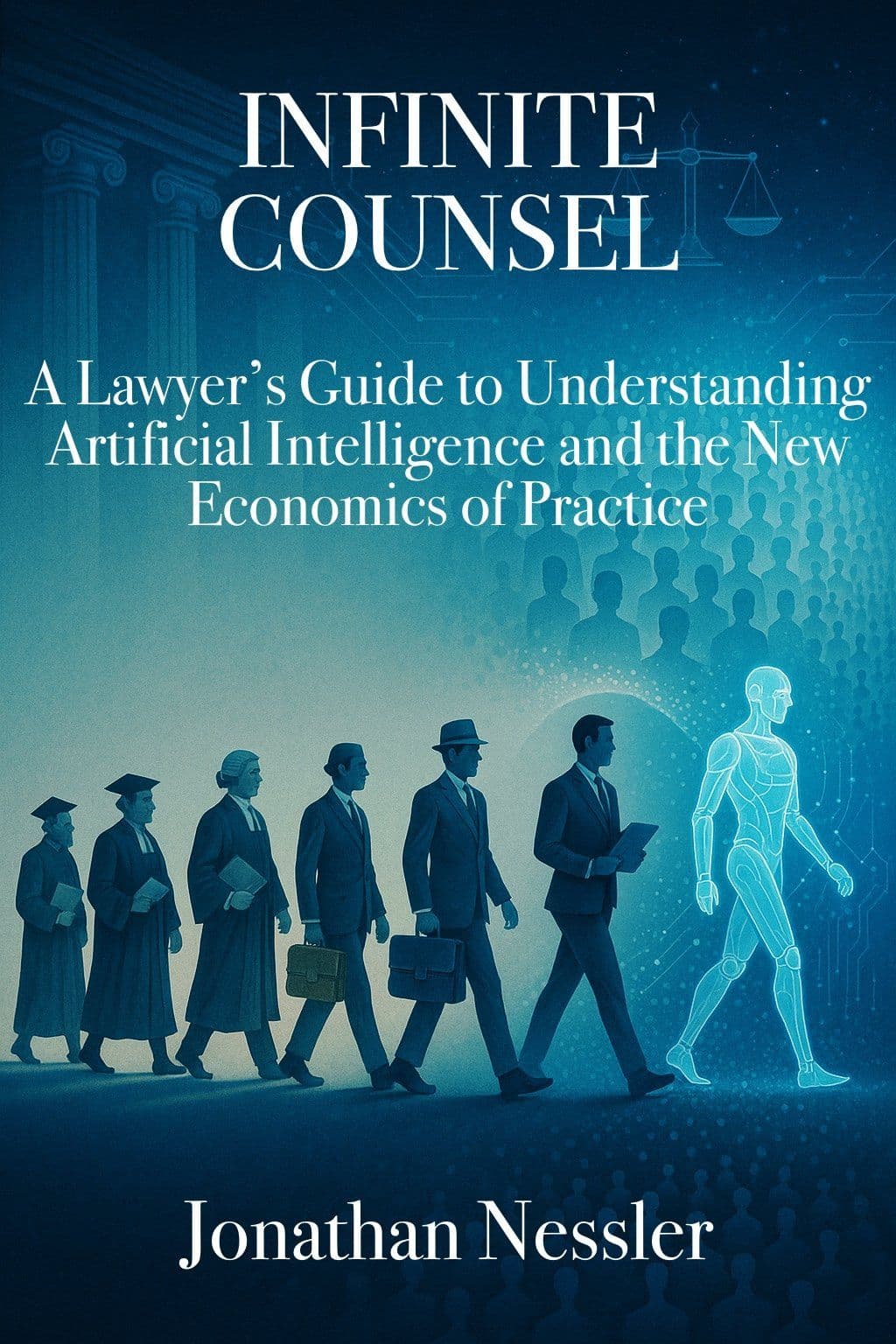
What happens to legal practice when work that once required hours can be done in minutes? Infinite Counsel follows that question through the technology and the economics of a law firm. Jonathan T. Nessler explains how language models work, why they make mistakes, and how to give them useful instructions. He then examines research, drafting, discovery, confidentiality, and the effect of AI on billing, staffing, and client expectations. The final chapters consider AI agents and the prospect of competent legal advice replicated at scale. The book asks what that would mean for lawyers, their clients, and the institutions responsible for governing the profession.
“This book is a guide and a conversation about why AI matters to law, how we got here, and how we might chart a path forward.”
Jonathan Nessler, Infinite Counsel, p. 10.
About the Author: Jonathan T. Nessler is an accomplished trial attorney, legal futurist, and recognized authority on the responsible use of artificial intelligence in the practice of law. He is based in Springfield, Illinois, where he has represented individuals and families in complex personal injury and wrongful death litigation since 2007. His work as an advocate has earned recognition from leading legal organizations, including The National Trial Lawyers, The Law Bulletin Publishing Company, and the American Society of Legal Advocates.
In addition to his litigation practice, Mr. Nessler is the founder of Integrated Cognition, LLC, a company focused on helping law firms, courts, and professional organizations integrate artificial intelligence in a manner that enhances human judgment while maintaining ethical, professional, and regulatory compliance. His work emphasizes practical and responsible AI adoption that improves efficiency and quality without compromising confidentiality or professional standards.
Mr. Nessler was appointed by the Illinois Supreme Court to serve on the Illinois Judicial Conference Task Force on Artificial Intelligence, where he helped develop statewide guidance and policy on the ethical use of AI within the judiciary and broader legal profession. He is also actively involved with the Illinois State Bar Association, where he has written and spoken extensively on artificial intelligence, legal ethics, and technology-driven practice management. His ISBA work has contributed to broader conversations on how AI should be governed and deployed within the legal profession.
A frequent speaker and educator, Mr. Nessler presents continuing legal education programs on generative AI, professional responsibility, and the future of legal practice. He is known for translating complex technical concepts into practical guidance for lawyers, judges, and legal organizations. He holds a Bachelor of Science degree and a Juris Doctor degree from the University of Illinois and is admitted to practice in state and federal courts, including the Supreme Court of the United States.
Through his combined experience as a trial lawyer, advisor, and policy contributor, Jonathan T. Nessler brings a unique and authoritative perspective on how artificial intelligence can be responsibly integrated into professional practice while preserving the core values of competence, judgment, and client service.
