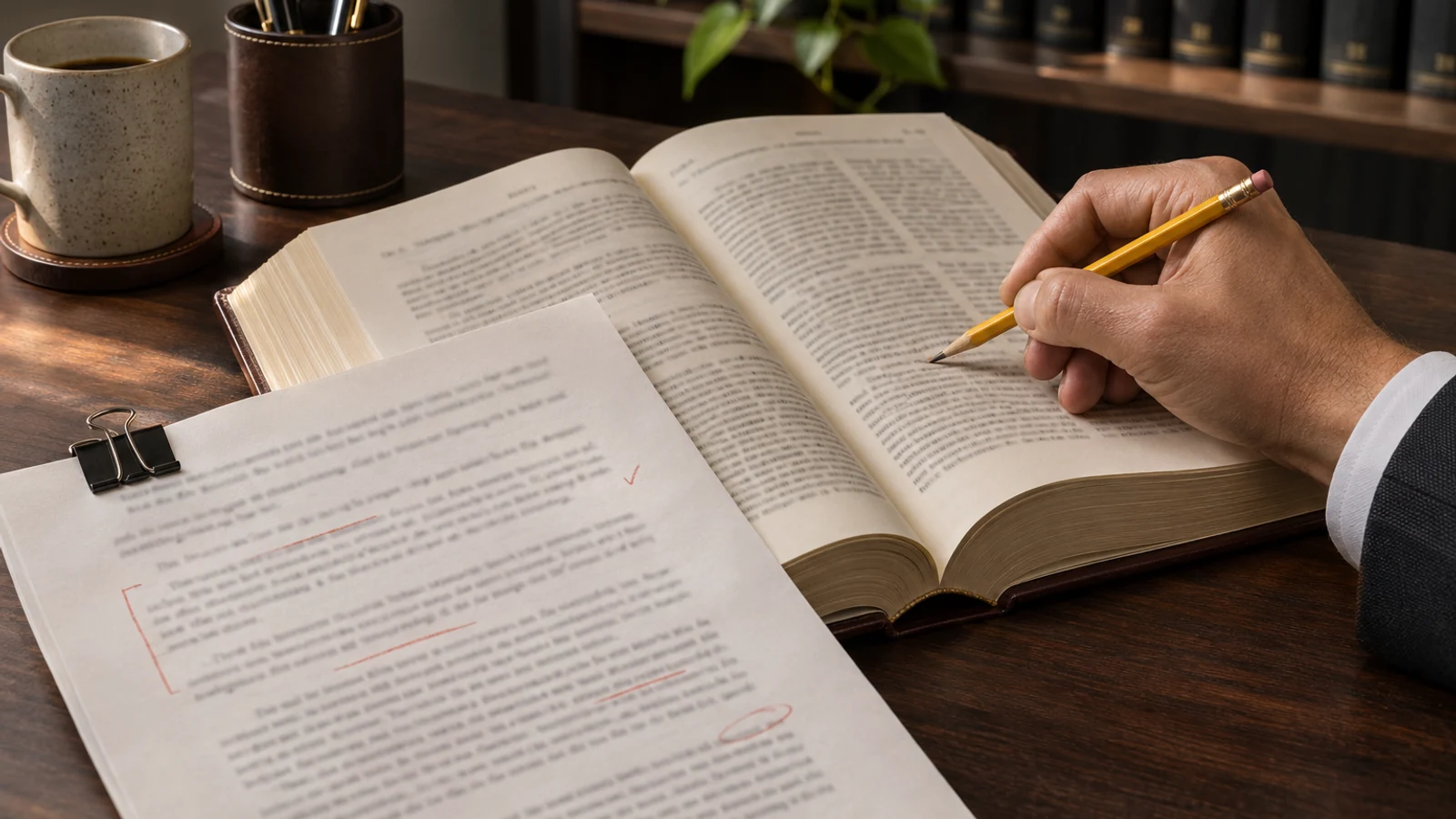
A court opinion can exist, a quotation can be exact, and the citation can still mislead. Suppose an opinion quotes a party’s argument and a brief presents those words as the court’s holding. Under revised Rule 46.5, the U.S. Court of Appeals for the Tenth Circuit in Denver will require a human to check that each authority supports the point the filing makes. (Final Rule 46.5(B)(4))
What changed between the proposal and the final rule?
Revised Tenth Circuit Rule 46.5 takes effect January 1, 2027, and covers briefs, motions, and other papers presented to that federal appeals court. The September 18, 2026 proposal limited the new human verification requirement to documents prepared with generative AI assistance. The final local appellate rule, published November 20, removed that condition and expressly requires checking what each cited authority supports. (September proposal · Court announcement · Final rule)
“These certifications have the same force and effect regardless of whether the brief, motion or paper was prepared with the assistance of artificial intelligence.”
What does Rule 46.5 require a human to verify?
Under Rule 46.5(B)(4), a human must independently check four things before a brief, motion, or other paper is filed or submitted. (Final Rule 46.5(B)(4))
- Each cited authority exists. Find the opinion, statute, rule, or other authority that the filing cites.
- Quotations and citations are accurate. Compare quotations word for word with the source, then check that each citation points to the right authority and passage.
- Each authority supports the point it is cited for. Read the passage in context and distinguish the court’s reasoning from a party’s argument, a dissent, or a quotation from another case.
- The filing complies with applicable rules and ethical obligations. Check the document against the rules and duties that govern the filing.
Rule 46.5(B) also retains the existing representations about proper purpose, the legal basis for the issues presented, and record support for factual contentions or denials. Verify factual assertions against the appellate record. (Final Rule 46.5(B)(1)–(3))
Does Rule 46.5 require a separate AI disclosure?
Presenting the paper supplies the certification under Rule 46.5 itself, without a separate AI disclosure or certificate. An attorney or self-represented party makes that certification by signing, filing, submitting, or later advocating the paper. It reflects the person’s best knowledge, information, and belief after an inquiry reasonable under the circumstances. The human verification in (B)(4) must occur before filing or submission. (Final Rule 46.5(A)–(B))
What can happen if a filing violates Rule 46.5?
If someone signs a paper in violation of Rule 46.5, the court may sanction the signer, a represented party, or both. It may act on its own or on a party’s motion. The amended rule expressly lists treating the affected issue as waived and striking the document. Other listed sanctions include dismissal or affirmance of the appeal, monetary sanctions, initiation of attorney disciplinary proceedings, and payment of reasonable expenses, including attorney’s fees. (Final Rule 46.5(C))
The court encountered both invented and misused authorities before this amendment. In its unpublished February 2026 order and judgment in Amarsingh v. Frontier Airlines, Inc., the panel found citations to nonexistent cases and misattributed quotations from real ones in an AI-assisted brief. The court applied Federal Rule of Appellate Procedure 38, ordered the appellant to pay $1,000 toward Frontier’s fees and costs, and referred the matter to Maryland disciplinary authorities. (Amarsingh, No. 24-1391, slip op. at 12–18)
How can a reviewer check the filing before submission?
Start with the sentence in the brief. For each legal proposition, make a row in a review table with the sentence, its source and pinpoint citation, and the result of the check. That makes it easy to see which assertions still need work.
- Open the source. Pull the full opinion or current rule from an authoritative source. Check the court, citation, and subsequent history as relevant.
- Compare the exact passage. Check the words, attribution, and pinpoint. Read the surrounding paragraphs to see which question the court was deciding.
- Test the sentence against the source. If the authority supports a narrower point, narrow the sentence. Find a better authority or remove a proposition you cannot support.
- Review the final version. Check rules, ethical duties, and factual claims against the record, then recheck any affected sentences or citations after a substantive edit.
To practice the proposition check, try Before You File, a source-checking exercise that asks you to compare a draft brief with the opinion it cites.
